

2026 Employee Ownership Spotlight
Discover how Iowa companies —including Baker Group, Woodruff Construction, Dean Snyder Construction, Mi-T-M Corporation, and Hometown Restyling—are making employee ownership part of their stories. Explore how this model supports their people, strengthens their businesses and helps build a lasting future.
Baker Group
 Baker Group: Carrying a Legacy Forward Through Employee Ownership
Baker Group’s story began in 1963, when Bernard “Bernie” Baker Jr. started a small plumbing contracting business on the east side of Des Moines, Iowa. Built on a strong work ethic and a commitment to quality, the company established principles that continue to guide its work today.
In 1984, Bernie’s son, BJ Baker, took over the business and expanded its capabilities while maintaining a focus on quality, service, and long-term relationships. Over the decades, Baker Group grew from a small plumbing contractor into a full-service specialty contractor providing engineering, design-build, fabrication, installation, and maintenance services for complex building systems.
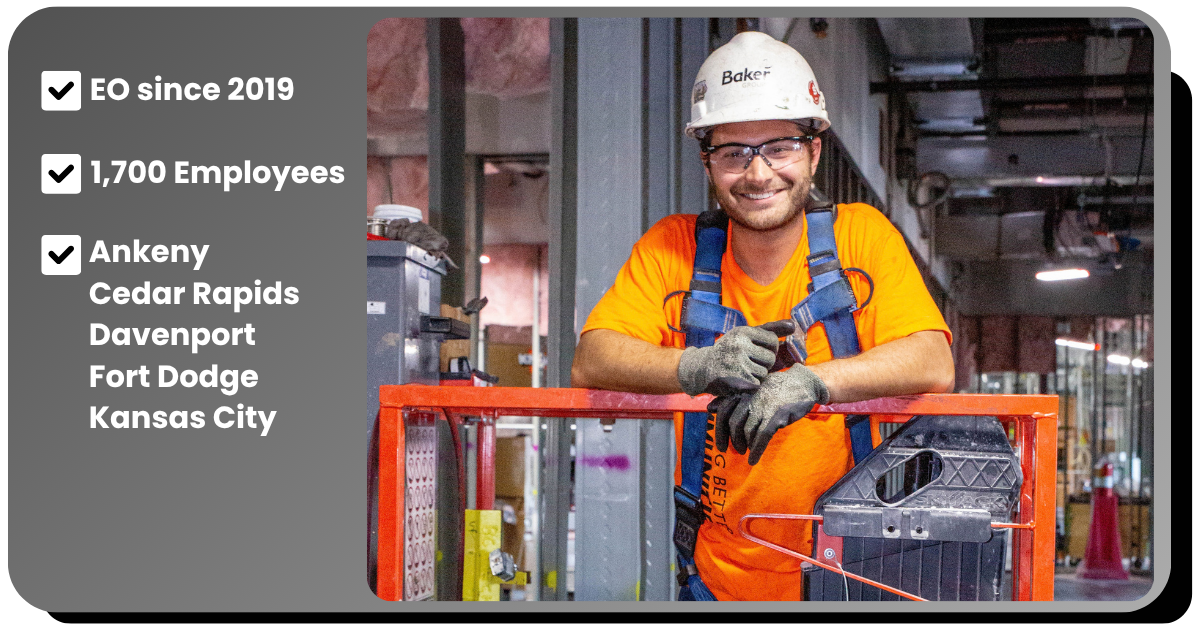
In 2019, BJ made a significant decision about the company’s future: he sold Baker Group to its employees.
At the time, the company had approximately 200 non-union employees. Today, Baker Group has grown to more than 600 employee-owners across the Midwest.
The transition was about more than changing the company’s ownership structure. It was an opportunity to preserve the legacy BJ and his father had built while empowering employees to help shape the company’s future.
Investing in the People Behind the Work
By becoming employee-owned, Baker Group gave its team members a personal stake in the company’s long-term success. Employee ownership strengthens the connection between employees and the work they do every day, encouraging them to take pride in their contributions and recognize how their efforts affect the entire organization.
That sense of ownership carries through every project, partnership, and customer relationship. Employees are encouraged to think beyond the immediate task, support one another, and make decisions that contribute to the company’s continued success.
For Baker Group, ownership represents a shared responsibility to protect its culture, deliver exceptional work, and serve clients and communities with integrity.
A Culture Where Every Role Matters
One of the defining features of Baker Group’s employee-owned culture is that ownership extends across the organization. From office staff and engineers to field teams and tradespeople, every employee plays an important role in the company’s success.
That shared responsibility reinforces the values that have guided Baker Group since its founding: quality craftsmanship, dependable service, strong relationships, and doing the right thing.
Employee ownership also encourages a long-term perspective. Rather than focusing solely on the job at hand, employee-owners have an opportunity to consider how their decisions contribute to the company’s future and the relationships they build along the way.
It all supports Baker Group’s promise to its clients: Expect the Best®.
Preserving a Legacy While Building the Future
BJ Baker’s decision to transition the company to employee ownership reflected his trust in the people who helped build Baker Group and his confidence in their ability to carry it forward.
Today, that trust continues to shape the company’s culture. Employee ownership provides a way to preserve Baker Group’s history and values while creating opportunities for employees to share in its long-term success.
The company’s growth from approximately 200 non-union employees in 2019 to more than 600 employee-owners today demonstrates how its reach has expanded while its commitment to quality and service remains central to its identity.
Advice for Business Owners Considering Employee Ownership
Baker Group encourages business owners to view employee ownership as more than a financial transition. It can be an opportunity to invest in employees, preserve a company’s culture and values, and create a shared commitment to long-term growth.
Building a successful employee-owned company takes intentional effort. Communication and ongoing education help employees understand what ownership means, how the business operates, and how their individual contributions influence its success.
When employees understand the value of their role and have a stake in the company's future, ownership becomes more than a structure. It becomes part of the culture.
For Baker Group, employee ownership is a continuation of the legacy that began with Bernie Baker in 1963—a legacy built on quality, service, and relationships, now carried forward by the people who make the company what it is today.
Woodruff Construction
 Woodruff Construction: 70 Years of Building Iowa’s Communities Through Employee Ownership
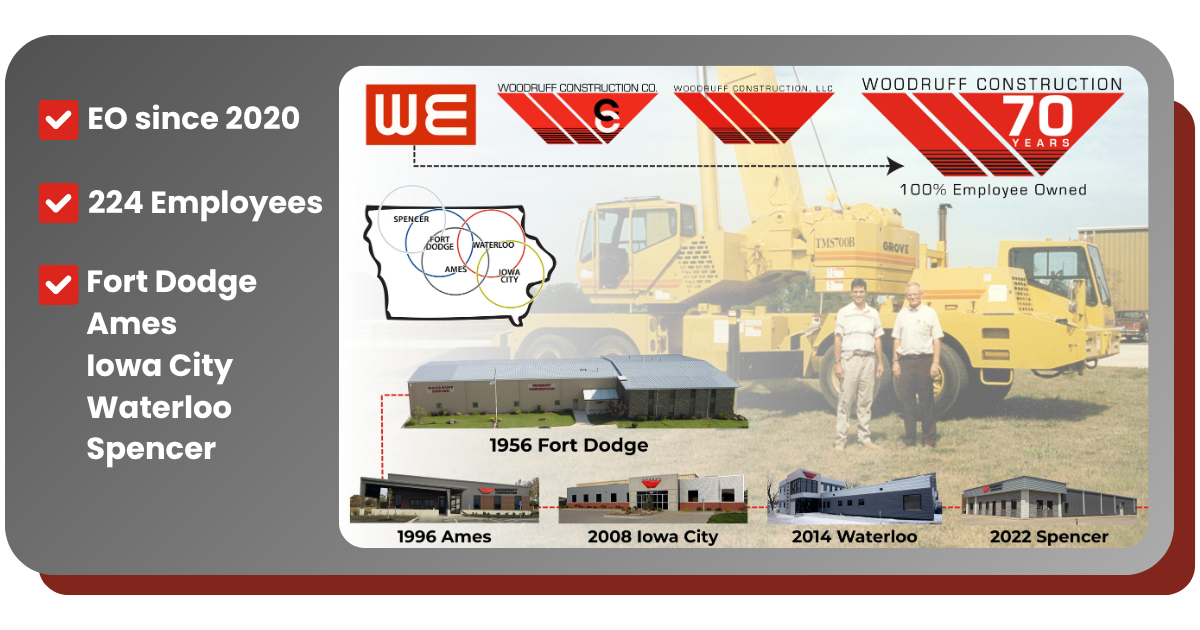
In 2026, Woodruff Construction celebrates 70 years of building, growing, and serving communities across Iowa. Founded in 1956 by Leonard Woodruff and Jack Evans, Woodruff-Evans Construction began as a general contracting firm serving Fort Dodge and the surrounding communities. What started as a local contractor has grown into a statewide construction company providing general contracting, design-build, and construction services across five regions.
Over the past seven decades, Woodruff’s growth has been built on strong client relationships, skilled employees, a commitment to safety, and continuous improvement. While the company has expanded its reach and capabilities, its core values and entrepreneurial spirit remain at the heart of its work.
A Family Legacy Becomes Employee-Owned
In 1990, Leonard’s sons, Don and Bill, took over the company and continued its growth, opening a second office in Ames in 1996. After two generations of family leadership, Woodruff made a significant transition on January 1, 2020, becoming 100% employee-owned.
The transition allowed the company to preserve its family legacy and established culture while transferring ownership to the employees who help make its success possible. Rather than selling to an outside entity, Woodruff chose a path that would keep the company’s future in the hands of its people.
At the time of the transition, Woodruff had approximately 167 employees across four regions. Today, the company has grown to 224 employees across five regions, with offices in Ames, Fort Dodge, Iowa City, Waterloo, and Spencer.
As Woodruff celebrates its 70th anniversary, employee ownership represents both a continuation of its history and an investment in its future. Every employee-owner has a stake in the company’s success, reinforcing a culture of accountability, collaboration, and long-term thinking.
Building Strong Communities and Putting People First
Woodruff’s mission is to build the future of our families, clients and communities. Employee ownership supports this mission by encouraging the company to pursue projects that make a meaningful difference in the communities where its employees live. The company also supports local organizations and puts its core value of “Service to Others” into practice.
Woodruff’s work spans water and wastewater, healthcare, education, industrial, commercial, municipal, and community projects throughout Iowa. Across these sectors, the company remains focused on helping clients achieve their goals while delivering an “Extraordinary Enjoyable Experience™.”
Just as important is the company’s commitment to its employees and their families. Each of Woodruff’s five regions has its own leadership team, project managers, superintendents, and field staff. By primarily working within a 70-mile radius of each regional office, Woodruff helps employees get home safely every night and maintain a healthy work-life balance.
This approach reflects the core value “Family Comes First” and allows the company to maintain a small-company feel while offering the capabilities and resources of a larger organization.
A Culture of Ownership and Accountability
For Woodruff, employee ownership creates a deeper connection between employees, their work, their clients, and one another. Employee-owners share responsibility for upholding the company’s core values and maintaining high standards in everything they do.
That sense of ownership extends to the customer experience. When employees have a personal stake in the company’s success, they are encouraged to strengthen client relationships, bring forward new ideas, and pursue training and development opportunities. This shared investment helps foster a culture where employees take pride in their work and are accountable for the results.
Advice for Business Owners Considering Employee Ownership
Woodruff believes giving employees a stake in the company encourages them to become more actively involved in making the business the best it can be. Employee-owners are motivated to build stronger client relationships, contribute innovative ideas, and embrace opportunities to learn and grow.
For Woodruff, employee ownership has provided a way to honor the company’s history while empowering the people who will shape its future. It has allowed the company to preserve its culture, continue serving Iowa communities, and build on the legacy established by Leonard Woodruff and Jack Evans.
Looking Ahead
As Woodruff Construction celebrates 70 years in business, the company recognizes the clients, trade partners, employees, and communities that have contributed to its success. Its history provides the foundation for continued growth, innovation, and investment in the future.
With 100% employee ownership and a continued commitment to its people and communities, Woodruff is building on seven decades of experience while looking ahead to the next generation of Iowa construction.
Throughout 2026, Woodruff will commemorate its anniversary by celebrating the people, projects, and partnerships that have defined its history and continue to shape its future.
Dean Snyder Construction
 How and why did your company become employee-owned?
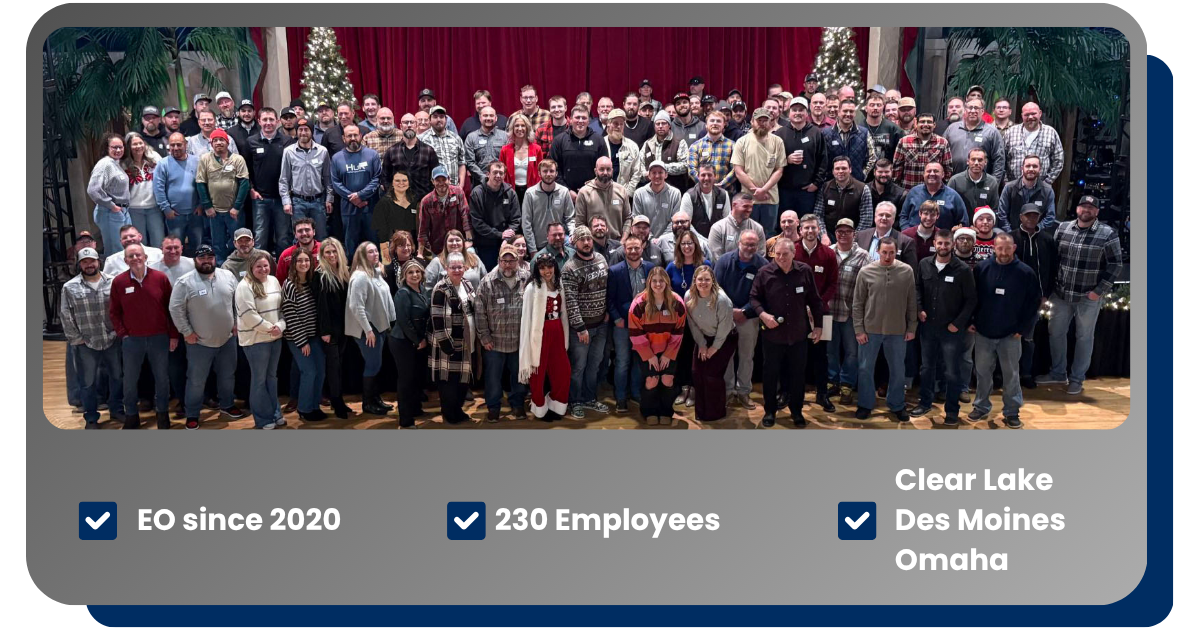
Dean Snyder founded Dean Snyder Construction in 1958, with his sons joining the business as soon as they were old enough to sweep. Today, the company continues to be family-led, with second- and third-generation ownership and fourth-generation involvement. We have had many of our employees spend 25 years or more with DSC (some closer to 40 years!), and they have played as important of a role as anyone else in building the company into what it is today. Becoming employee-owned was a natural way to expand that sense of family and give the people who have invested their careers in DSC a stake in its future while also planning for their long-term future and retirement.
We also saw employee ownership as a way to help ensure the company continues long after any one generation of leadership. By giving employees an ownership stake, the hope is that they think and act like owners, taking responsibility, looking for ways to improve, and understanding how their work impacts the success of the company.
What has employee ownership meant for your employees, business, or community?
As employees begin to understand how the ESOP works (and there has certainly been a learning curve), they also begin to see the connection between the work they do every day and the success of the company. They have an ownership stake without having to purchase stock or invest their own money.
One thing we stress is that the little things really do matter. Avoiding mistakes and rework, finding ways to reuse materials, reducing waste, working efficiently, and looking out for the company all have an impact on the bottom line. As employee-owners, that bottom line has a more personal meaning.
So, we believe the ESOP has helped employees become better stewards of the company, take greater ownership in their roles, and recognize that their everyday decisions can make a difference, not only for the company today, but for their own future.
What makes your employee-owned culture unique?
Our roots as a family business still shape our culture today. The owners of DSC have always been actively involved in the company and have led by example with a strong work ethic and commitment to its success. That mentality has carried throughout the company, with employees who are willing to step up, put in the extra effort, and do what needs to be done to get the job done. We call ourselves “family-and-employee-owned.”
We wanted our transition to employee ownership to reflect that culture. When we established the ESOP, employees who had already been with DSC for more than five years were grandfathered in rather than having to start over with the standard waiting and vesting period. It was important to recognize the people who had already invested years in helping build the company.
We also continue to offer a company match on our 401(k) plan in addition to the ESOP. The ESOP wasn't intended to replace what we were already providing our employees, but to give them another opportunity to benefit from the success they help create.
What advice would you give to another business owner considering employee ownership?
If your goal is to see your business continue beyond you, an ESOP is worth considering. Your employees are a big part of the reason your company is successful, and employee ownership gives them the opportunity to continue building on what you started.
Our advice would be to learn about the options and don't feel like you have to do everything at once. We started with a lower percentage so we could learn and understand how the ESOP worked. Over time, we've seen the value it can provide as a retirement benefit, a retention tool, and a way to encourage greater ownership and accountability throughout the company.
Mi-T-M Corporation ESOP Story
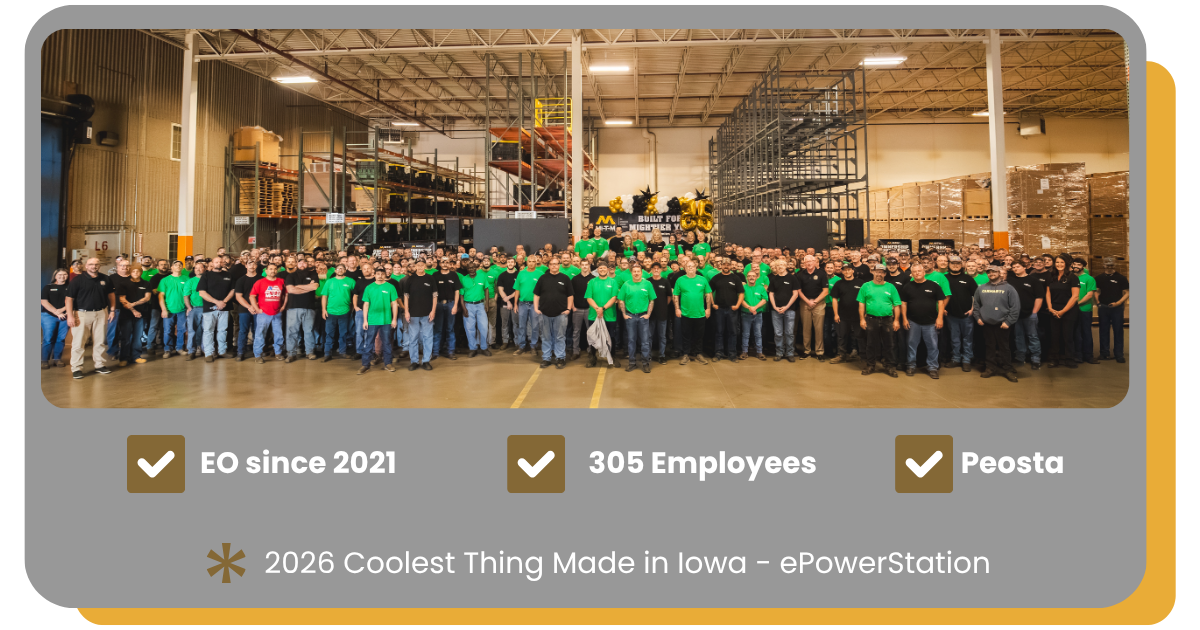 Mi-T-M Corporation was founded in 1971 by A.J. Spiegel, a professional paint contractor, who recognized the need for a portable pressure washer. 55 years later they ave grown into a 1 million square foot facility with an extensive product line that features pressure washers, generators, air compressors and more. After 50 years in business, it was time for A.J. to decide his succession plan. It was important to him that Mi-T-M stayed rooted in the Peosta community and with the employees who helped build it. In 2021, the ESOP was established as a 100% employee owned structure.
Since Mi-T-M’s shift to an employee-owned company, they have focused on maximizing long-term value for employee owners by strengthening manufacturing operations, reinvesting in people, and intentionally building an ownership culture grounded in strategic thinking.
Educating employee owners about the ESOP is a core component of their ownership culture. They intentionally cultivate an ownership culture that helps employee owners understand their role not just as workers, but as stewards of the business. Education, transparency, and peer-led engagement are central to helping employees feel personally invested in the company’s success and accountable for its performance.
At their May 2025 Share Reveal Event, they celebrated the achievement of 217 employee owners who became fully vested. Mi-T-M was recently awarded the Rising Star Award at the Iowa/Nebraska Chapter ESOP Conference and the 2026 Coolest Thing Made in Iowa, for their ePowerStation. Both are a true testament of the dedication that their employee owners bring to work every day. They are looking forward to another year of success and growth.
Hometown Restyling's Employee Ownership Journey
 Ownership belongs to everyone who helps create the company's success.
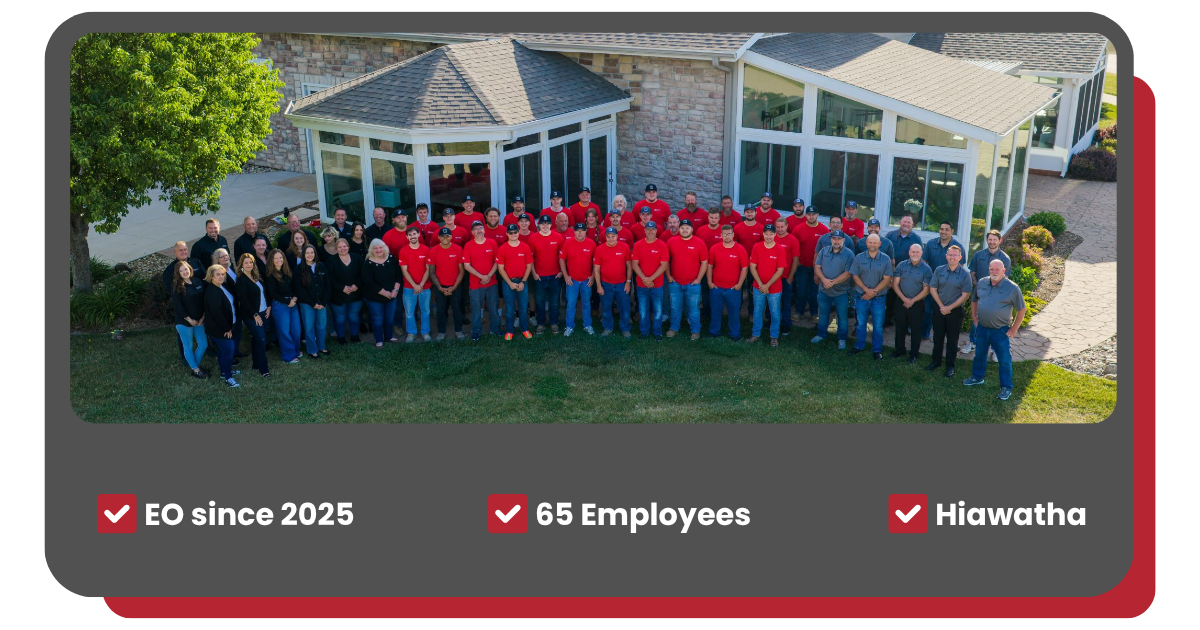
That simple belief ultimately led Hometown Restyling to become a 100% employee-owned company in November 2025.
Hometown Restyling is a full-service residential remodeling company that has served homeowners throughout Eastern Iowa since 1986. Founded by Wayne Winn, the company built its reputation on quality workmanship, strong customer relationships, and a commitment to both employees and the communities we serve.
In 2020, five key employees purchased the company from Wayne, allowing him to retire and enjoy life after ownership while preserving the business he had spent decades building. The transition proved successful, with the company roughly doubling in size between 2020 and 2022.
As we looked ahead, we knew another ownership transition would eventually be needed. While each of the five owners had different personal goals, timelines, and future plans, we shared a common belief: the next chapter of Hometown Restyling should create opportunities for the people helping build the company every day.
As we explored employee ownership, we encountered more questions than answers. A turning point came when we attended an IA-CEO employee ownership event. The relationships, education, and guidance we found there opened doors and ultimately helped make our ESOP possible.
In November 2025, Hometown Restyling officially became a 100% employee-owned company through an Employee Stock Ownership Plan (ESOP).
For me personally, I never aspired to become a sole owner. One of the things I enjoyed most about our ownership group was the collaboration, shared responsibility, and team effort involved in leading the company together. As I considered the future, I increasingly felt that the opportunity was bigger than any one owner.
When the five of us purchased Hometown Restyling in 2020, ownership opportunities existed for only a handful of people. Through our ESOP, we were able to extend that opportunity to all 65 employees.
What started as ownership by one became ownership by five and ultimately became ownership that belongs to everyone.
What makes our employee-owned culture unique is that it was built by people who experienced ownership firsthand and wanted to pass that opportunity forward. Our ESOP wasn't simply a transaction. It was a decision rooted in the belief that the people who help build a company's success should have the opportunity to share in it.
We are still early in our employee ownership journey, but we already see encouraging signs. Several employees have told us that "something feels different." It's a comment we've heard more than once. There is a growing sense of pride, engagement, and shared purpose because every employee-owner now has a stake in the future of the company.
Employee ownership has also allowed us to remain locally led and focused on the long term. Our employee-owners live and work in the same communities we serve, and we believe our customers benefit when the people doing the work have a genuine stake in the company's success.
What excites me most isn't what the ESOP means today. It's what it will mean years from now.
I can't wait for the day the first employee retires with a substantial ESOP account balance. Seeing someone benefit from years of hard work, commitment, and ownership will be one of the greatest rewards of this entire journey. A future hug from an employee, or spouse, thanking us for helping create that opportunity would be worth more than any financial return. To me, that's what employee ownership is really about.
For business owners considering employee ownership, my advice is simple: start the conversation earlier than you think you need to. The ESOP model offers far more flexibility than we ever imagined when we first began exploring our succession options.
We're grateful to the owners, advisors, and employee-ownership advocates who helped guide us along the way. If you're considering employee ownership, we'd be happy to share our experience and lessons learned. There are often more options, and more flexibility, than business owners initially realize.
Dave Wageman, CEO
At the IA-CEO, we believe the stories behind Iowa's employee-owned businesses are some of the most inspiring examples of resilience, innovation, and shared prosperity. Through Employee Stock Ownership Plans (ESOPs), worker cooperatives, Employee Ownership Trusts (EOT), and other forms of broad-based employee ownership, these companies have not only redefined business success but have also empowered their employees as true stakeholders.
On this page, you’ll find success stories of Iowa companies that have embraced employee ownership. These businesses represent a diverse range of industries and approaches, but they all share a common commitment to fostering a culture of ownership, collaboration, and long-term growth. Whether transitioning to employee ownership, managing a business as an ESOP, or becoming an engaged employee-owner, their journeys highlight the transformative power of employee ownership in shaping strong, sustainable companies.
Explore these stories to see firsthand how employee ownership is making a difference across Iowa and beyond.
Do you have a story to tell? Share it below.

